KriyaXlabs · Design to code
Design to production code, built and verified
In short
KriyaXlabs converts designs into production code for Next.js, Flutter or React Native using SketchXFlow, our own five-agent pipeline: it infers real layout structure rather than absolute positions, builds the result in an ephemeral container to prove it compiles, repairs failures, and pushes to your GitHub or GitLab.
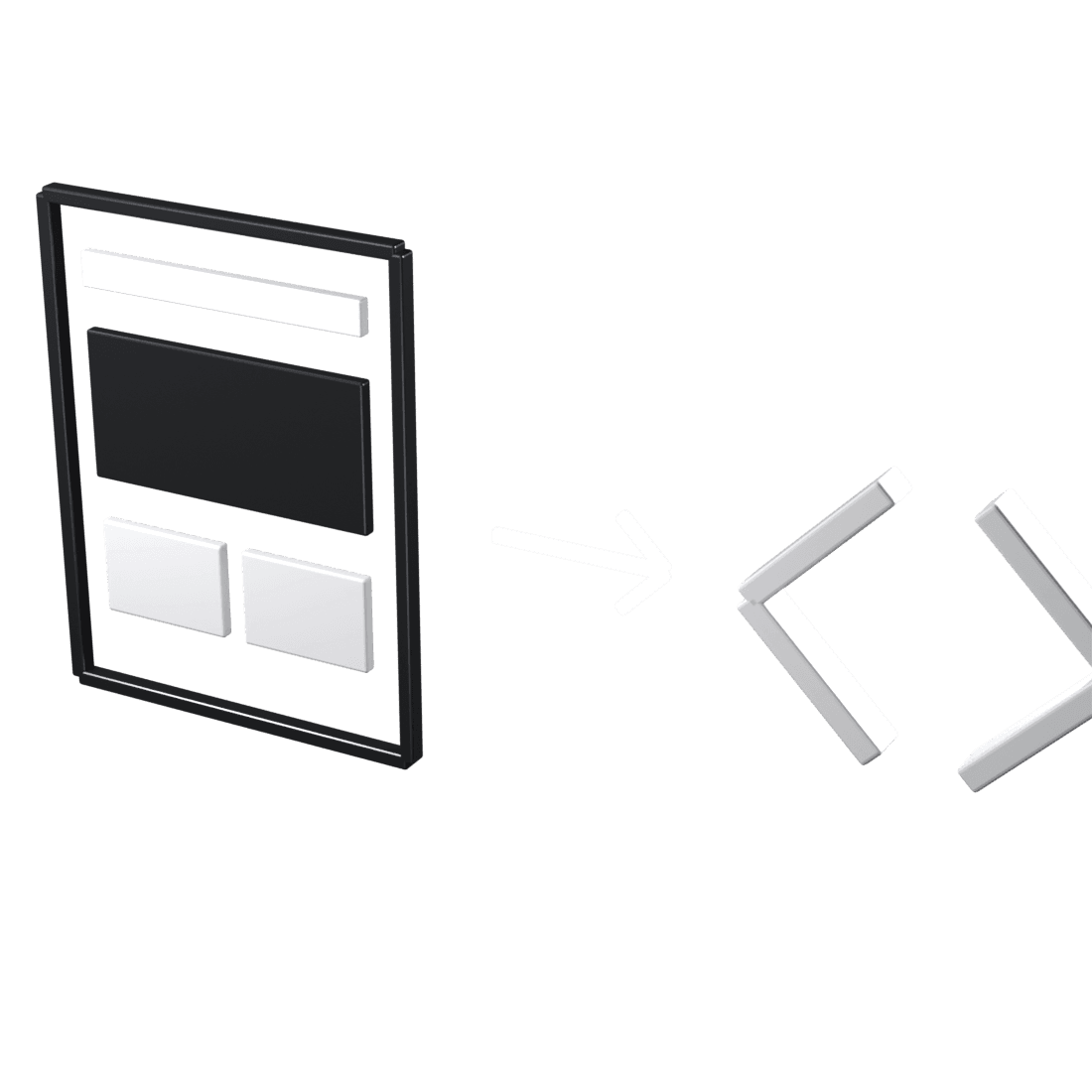
Converting a design to markup takes an afternoon and produces a pile of absolutely positioned boxes that break the moment the window resizes. Converting it to code a developer will accept — real flex and grid, responsive breakpoints, components where the design implied them — is a different problem.
We automated that problem in SketchXFlow, and we use it for client work. The output lands in your repository, compiles, and is reviewable in a pull request like any other code.
What you get
Layout inference
Rows, columns, spacing intent and repeated components recovered from the design rather than copied as coordinates.
Three targets from one design
Next.js for web, Flutter or React Native for mobile.
Verified by building
An ephemeral cloud container installs, builds and proves the project compiles. A failed build is a rejected output.
Self-healing repair
Deterministic fixes first, a model only for what remains, and a capped retry loop.
Your repository, first commit
Pushed to GitHub or GitLab so it is ordinary code from day one — reviewable, diffable, yours.
How it runs
- 01Design agreed, or generated with you in SketchXFlow.
- 02Conversion and cloud build, with the build log as the acceptance test.
- 03Pull request in your repository for review.
- 04Iteration by conversation, not re-rolling.
Built with
Proof, not promises
Products of ours that do this in production.
Questions about design to code
Design to codeCan you convert a Figma design to code?
Yes. The pipeline infers the layout structure the designer implied — flex, grid, breakpoints, components — rather than emitting absolute positions, and verifies the result by building it before you see it.
Design to codeIs the generated code maintainable?
It is written to be read in a pull request, which is the constraint that makes it maintainable. It lands in your own repository, and your team edits it like any other code.
Design to codeWhat does it not do?
It removes the least interesting work — translating a settled design into structure, styles and breakpoints. It does not replace product judgement, state management or backend work, and we do not sell it as if it did.
Need design to code?
Thirty minutes, no obligation. We reply within one business day and share a detailed proposal within two business days of the call.
30 min · No obligation · Reply within one business day